Address
1. 70 Asklipiou Street, Mytilene, 81100
2. 7 Myraktis Street, Nea Smyrni, 17121
Working Hours
Mon-Fri: 09:00-21:00
Saturday:10:00-14:00

Lorem ipsum dolor sit amet, consectetur adipiscing elit. Nam bibendum ultrices arcu ac vestibulum. Nam nec tempus quam.

[fusion_separator style_type=”none” sep_color=”” border_size=”0″ icon=”” icon_circle=”” icon_circle_color=”” alignment=”center” hide_on_mobile=”small-visibility,medium-visibility,large-visibility” class=”” id=”” top_margin=”10px” bottom_margin=”10px” /]

[fusion_button link=”https://physiogalinos.gr/our-history/” text_transform=”” title=”” target=”_self” link_attributes=”” alignment=”left” modal=”” color=”default” button_gradient_top_color=”” button_gradient_bottom_color=”” button_gradient_top_color_hover=”” button_gradient_bottom_color_hover=”” accent_color=”” accent_hover_color=”” type=”” bevel_color=”” border_width=”” size=”” stretch=”default” shape=”” icon=”” icon_position=”left” icon_divider=”no” animation_type=”” animation_direction=”left” animation_speed=”0.3″ animation_offset=”” hide_on_mobile=”small-visibility,medium-visibility,large-visibility” class=”” id=””]Our History[/fusion_button]

αναπνευστική φυσικοθεραπεία

Respiratory Physiotherapy: Benefits – Programs

Respiratory physiotherapy is a special branch and is performed by specially trained physiotherapists for the purpose of harmonious cooperation of the respiratory muscles, good ventilation of the lungs and good drainage of bronchial secretions.

Respiratory physiotherapy refers to the exercises and techniques used to relieve patients with chronic respiratory problems.

Patients with chronic respiratory diseases, face major breathing problems, even for performing small and easy movements, as well as intense stress.

The goals of respiratory physiotherapy are to improve pulmonary ventilation, increase endurance in patients with reduced respiratory capacity, and bronchial cleansing.

Specifically, respiratory physiotherapy is indicated in acute and chronic diseases of the respiratory system, in operated patients, in disorders of nervous respiratory control, in deformities of the chest and in disorders of respiratory function due to poor posture.

TECHNIQUES

The physiotherapist is called upon to apply the techniques of respiratory physiotherapy in daily clinical practice, knowing that:

A) For the techniques of improving pulmonary ventilation and reducing respiratory work there is clear research evidence of their effectiveness.

B) For bronchial cleansing techniques, because not all bronchial clearance measuring instruments are valid, the evaluation of the effectiveness of the applied techniques is scientifically questionable.

The decision to choose the technique that the physiotherapist will choose, depends on many factors such as the patient’s history, clinical picture, laboratory test, time available and the patient’s ability but mainly on the goal we want to achieve. specific time for that particular patient.

For the physiotherapist it is important to know if the technique he decides to apply is more effective, with less cost of time and money, more understandable and in the long run more easily applicable by the patient himself.

These techniques are:

  • Proper Positioning: With proper positioning of the patient from supine to sitting position and gradually to the upright position, all lung tumors, capacities, and oxygen flow in the body’s airways increase.
  • Exercises for controlled breathing: Chest breathing, abdominal breathing and their combination are taught. In this way the synchronization of the movements of the chest and abdomen is achieved, increasing the pulmonary capacity and reducing the dead space.
  • Applying positive pressure to the body’s airways: This application is done with the use of various oxygen devices and achieves the temporary increase of lung tumors and the improvement of gas exchange.
  • Strengthening of the respiratory muscles: To strengthen the respiratory muscles, the intensity of the exercise should be high enough to achieve a result, its duration reaches 30 minutes and the frequency is up to three times a week.
  • Bronchial drainage with gravity and manipulations: Using gravity provides small results in bronchial cleansing, while clearly better results exist when bruises and vibrations are applied to the patient’s back and chest which is placed in different positions.
  • Technique of rapid exhalation: Cough removes foreign bodies or mucus from the upper respiratory tract. Thus, in cases where the patient can not cough, special tricks are adopted such as panting and flossing, which in combination with boredom and vibration help in bronchial cleansing.
  • Autogenous drainage: It is the combination of abdominal breathing together with chest expansion exercises that improves bronchial clearance and pulmonary ventilation.

BENEFITS

The physiotherapist involved in respiratory physiotherapy should be informed in detail by the treating physician about the condition and precautions related to the patient’s problem. Then seeing the patient makes his own assessment, about his posture, chest shape, way of breathing, shortness of breath, cough, secretions and his general condition (color of face, lips, mental mood etc). So he implements a respiratory physiotherapy program suitable for the specific patient. In acute lung diseases in combination with drugs, it facilitates and accelerates the recovery of the patient while in chronic diseases it slows down the progression of the disease.

Serious daily problems of the respiratory system are COPD, asthma, chronic bronchial asthma, allergic asthma, pulmonary emphysema, pulmonary abscess, chronic obstructive pulmonary disease.

gonorrhea, atelectasis, pulmonary embolism and pneumonia. So with respiratory physiotherapy we can significantly improve many of the problems of the respiratory system whether it is the result of an illness or condition or due to anatomical changes, injuries, through the techniques of the physiotherapist and the aids to improve the respiratory capacity.

PhysioGalinos Rehabilitation Clinics have specialized physiotherapists on chronic respiratory problems as well as state-of-the-art equipment for immediate results. We also provide home support where necessary with portable special equipment.

Photo source: physioathens.gr

αυχεναλγία

Neck Pain: What Causes Neck Pain And How Is It Treated?

Neck pain is an extremely common problem, as neck pain is reported in about 60% of the adult population with concomitant functional disorders.

The neck is probably the only area of ​​the body that is affected by so many factors and so many other systems for the appearance of a semiology. It supports the head and rests on the chest. It is a sensitive area in which a simple touch of the hand can convey feelings of friendship, love and offer.

Cervical pain is a very common ailment of various origins, which can occur in the form of an acute crisis or even have a chronic course. It can take many forms, be it unilateral or bilateral, cause headaches and restrict cervical movements. The complex anatomy of the cervix makes it difficult to identify the structure responsible for pain. Many times the cause is multifactorial.

Diagnostic Approach

In patients with neck pain the clinical approach aims to determine the origin of the symptoms, the extent of the lesion and the need for conservative treatment or surgery. Paraclinical tests and in particular neurophysiological and neuroimaging methods are necessary if the history and rheumatological-neurological assessment indicate the presence of damage, in order to accurately diagnose the problem.

Treatment

Medication for neck pain involves non-steroidal anti-inflammatory drugs, steroids, muscle relaxants, tricyclic antidepressants, vitamins, as well as vasodilators and circulatory enhancers.

In patients diagnosed with neck pain, only a small percentage need surgery and this percentage includes patients where the causes of dysfunction are related to the spinal cord, resulting in weakness of the upper limb or prolonged shoulder pain, provided that it has failed. the conservative approach. Conservative treatment should be maintained and last as long as possible. Conservative treatment should be given for at least 6 to 12 weeks before deciding on surgery. Of course there are exceptions, such as in marked motor impairment with worsening symptoms where it is best not to expect more than three weeks.

Physiotherapy Treatment

Organized physiotherapy is the best therapeutic intervention in the treatment of neck pain and the only one that has no side effects. Offers:

  • Reduction of pain
  • Relaxation of the muscles of the area
  • Improving the mobility of the cervical spine, the head of the shoulders, the rest of the spine and possibly other disorders in the other joints
  • Increasing the strength of the neck muscles, back muscles, shoulder girdle muscles, abdominal muscles, etc.
  • Relapse prevention

Physiotherapy for neck pain is performed with the following techniques:

  • High Power Antistatic & Capacitive Radiofrequency Therapy – TECAR therapy
  • Thermotherapy – Cryotherapy
  • Cryotherapy
  • Electrotherapy
  • Classic form of TENS
  • Form of electroacupuncture
  • Massage
  • Kinesiotherapy

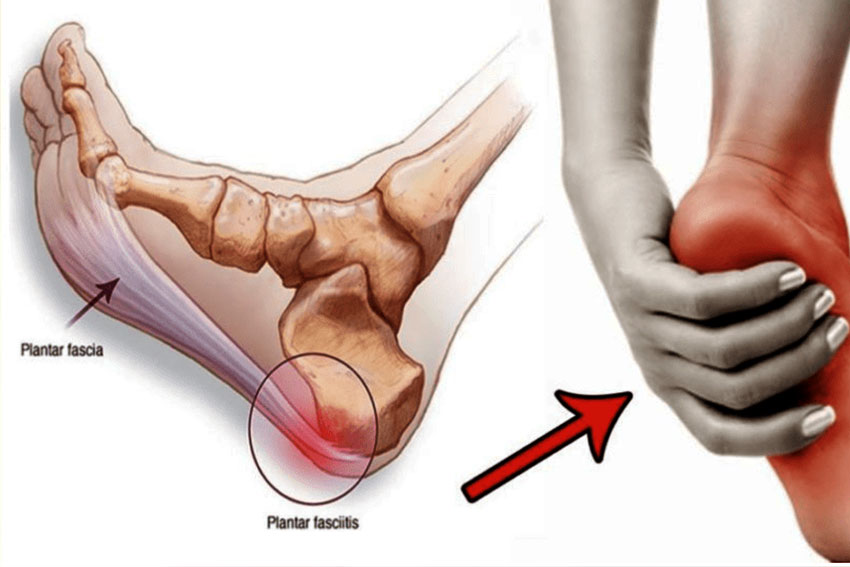
Plantar Fasciitis

What is plantar fasciitis?

Plantar fasciitis is a condition in which there is injury and inflammation in the plantar fascia, i.e. the part of the connective tissue that forms the arch of the sole.

This usually happens at the point where the plantar fascia joins the heel bone. Plantar fasciitis is the most common cause of pain in the heel area.

During walking or running tension is created in the plantar fascia. When this tendency is excessive or repetitive, the plantar fascia is injured. This condition is also characterized by inflammation and degeneration of the area.

This can be exerted by a very large load along the plantar fascia (greater than its strength) or by its gradual injury due to overuse.

Sometimes the so-called “heel spur” develops due to plantar fasciitis.

Cause of plantar fasciitis

It usually occurs in runners, dancers and instrumental athletes. Also in people who walk too much especially on uphill ground or uneven surfaces. It also occurs in older patients who stand for long periods of time.

Plantar fasciitis is often associated with stiffness of the gastrocnemius muscles or with incorrect biomechanical limb flexion such as flatfoot or clubfoot.

Symptoms

Patients with plantar fasciitis experience pain below the heel and along the sole. There is a hypersensitive spot when touching the lower surface of the heel. The pain is increasing in the first steps of the day and subsides as the area warms up.

In mild cases patients ache after walking, running, jumping, etc. As the disease progresses, pain also exists during the above activities.

In very severe cases the patient is unable to charge his leg.

Diagnosis

A history and clinical examination are sufficient to lead the physiotherapist to diagnose plantar fasciitis. Additional tests (x-rays, diagnostic ultrasound, magnetic topography) confirm the injury and determine the exact degree of fracture.

Treatment

The treatment of plantar fasciitis requires a detailed evaluation of all the factors that cause it, as well as their effective treatment. Most patients recover completely with appropriate physiotherapy. The degree of success of the treatment depends to a large extent on the cooperation of the patient with the physiotherapist. It is very important to avoid activities that increase the symptoms. This helps the body heal its damaged tissues.

Avoid activities such as running, standing and jumping. Ignoring the pain and symptoms and continuing the full activity the condition passes into the chronic stage. Immediate and appropriate treatment is valuable for the rapid recovery and healing of the injury. The treatment for the first 72 hours aims to reduce pain and swelling, so the patient rests the leg and applies ice therapy (3 to 4 times a day).

Causes of plantar fasciitis

There are many factors that cause plantar fasciitis. All should be evaluated by a physiotherapist and treated appropriately. Some of them are:

  • Biomechanical imbalance (especially flatfoot)
  • Ankle joint stiffness
  • Calf muscle stiffness (gastrocnemius, tibia)
  • Excessive training is inappropriate
  • Overweight patients
  • Unsuitable shoes
  • Insufficient warm-up
  • Imbalance

Physiotherapy for plantar fasciitis

Physiotherapy in patients with plantar fasciitis is necessary for the rapid and complete recovery of the disease.

Physiotherapy includes:

  • TECAR
  • Massage
  • Manual therapy
  • Electrotherapy
  • Taping
  • Exercises to improve elasticity, strength and balance
  • Dry needle technique
  • Education
  • Ergonomics tips
  • Program for gradual return to daily activities
έξω επικονδυλίτιδα

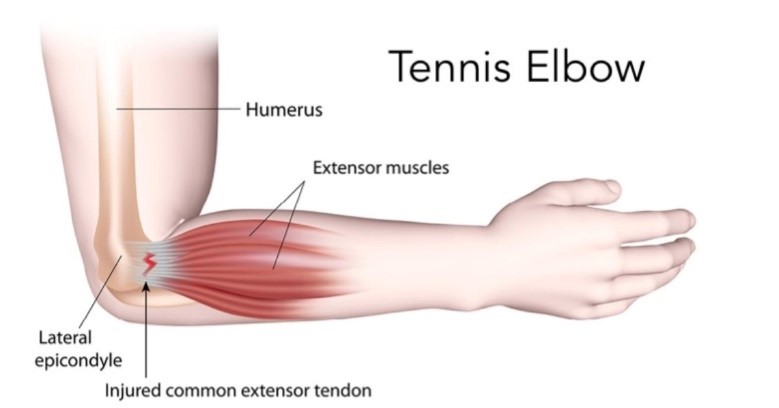
Lateral Epicondylitis – Tennis Elbow

What is Lateral epicondylitis?

Lateral epicondylitis is an overuse syndrome that causes pain on the outside of the elbow. Although it can occur at any age, it is most common between the ages of 40 and 50.The muscles on the outside of the elbow are called the extensor muscles of the wrist and fingers. These muscles move the wrist and fingers (stretching movements, opposite movement to what we do when we clench a fist). The extensor muscles of the fingers and wrist begin (adhere) to the outer epicondyle, a bony protrusion on the inner surface of the elbow with a common tendon.

lateral epicondylitis

During the contraction of the extensor muscles, their joint tendon and the lateral epicondyle are burdened. When this load exceeds the strength of the tendon then the tendon is injured. This is usually due to a gradual tendon injury (overuse syndrome) or a direct injury ratio (eg a fall).

Causes of lateral epicondylitis

Although the name “Tennis Elbow” implies that the incidence of injury is high in tennis athletes, one does not need to play tennis to develop lateral epicondylitis. It is a fact that we find it more often in “non-tennis players” than in tennis players. It is directly related to the repetitive contractions of the extensor muscles of the wrist and fingers.

We observe this in athletes of tennis, babington and generally in racket sports.

Also in professions such as carpenter, oil painter, woodcutter, builder, electricians (repeated use of screwdrivers), sewing, knitting and typing.

It is common for the onset of the condition to be associated with the patient’s involvement in an activity for which he was not properly prepared (eg a tennis match after a long absence from the sport). More rarely it appears suddenly. This happens when the extensor muscles are called upon to cope with a load far greater than their strength.

Finally, a serious cause is the wrong technique in tennis.

Symptoms of lateral epicondylitis

The symptoms of lateral epicondylitis usually develop gradually over time. Initially there is discomfort on the outside surface of the elbow which increases with activity. The pain is 1 to 2 cm below the lateral epicondyle, a point which is also sensitive to touch. The pain often reflects up to the wrist. In more severe cases there is pain at night and acute pain with activity.

There is also muscle weakness resulting in a weak grip. Patients with lateral epicondylitis of the elbow experience pain with daily movement such as lifting the glass, turning the door knob, opening a jar or turning the steering wheel while driving.

Stiffness in the elbow area is common especially in the morning.

Diagnosis

Subjective (taking a history) and objective (clinical examination) evaluation are sufficient to lead the physiotherapist to diagnose lateral epicondylitis. Further testing (eg diagnostic ultrasound, magnetic resonance imaging) helps to confirm the diagnosis and gives us additional information about the severity of the disease.

Treatment

In most cases of lateral epicondylitis, patients recover completely with appropriate physical therapy. This requires detailed evaluation and treatment of all risk factors for the development of the disease.

The degree of success of the treatment depends to a large extent on the cooperation of the patient with the physiotherapist. It is very important to avoid activities that increase the symptoms. This helps the body heal damaged tissues. Ignoring the symptoms and pain and continuing to be fully active, the condition progresses to the chronic stage.

Immediate and appropriate treatment is valuable for the rapid recovery of the disease. The treatment in the first 72 hours (acute stage) aims to reduce pain and inflammation. So the patient rests from activities that aggravate the symptoms and uses ice therapy 3 to 4 times a day. A program to improve the strength and elasticity of the extensor muscles of the wrist and fingers should be implemented as soon as possible in the painless range.

Prognosis of lateral epicondylitis

With proper treatment in most cases the recovery takes a few weeks. In case of chronic pain, the recovery lasts up to six months.

Factors for the development of lateral epicondylitis

There are several factors that contribute to the development of lateral epicondylitis. All should be evaluated and corrected by the physiotherapist in collaboration with the patient. Some of them are:

  • Excessive or inappropriate work
  • Wrong sport technique or wrong equipment
  • Muscular weakness
  • Muscle stiffness
  • Joint stiffness
  • Insufficient warm-up
  • Inadequate recovery from a previous injury in the area of ​​the match
  • History of neck injury

In tennis athletes the size of the racket, the size of the handle, the surface of the court and the weight of the ball play a crucial role in the development of lateral epicondylitis.

Physiotherapy for lateral epicondylitis

Physiotherapy is vital not only for faster and more complete recovery but also for the prevention of the disease. Physiotherapy includes:

  • Soft molecule techniques (massage)
  • Electrotherapy
  • Stretches
  • Manual Therapy
  • Taping
  • Dry needle technique
  • Ice therapy or heat therapy
  • Progressive program to strengthen and increase the elasticity of the extensor muscles of the wrist and fingers